Call Us At: + 84 982 167 628


Binchotan Grades Explained: How to Choose the Right Grade for Your Market
Discover the binchotan charcoal grading system. Learn how to select the right grade for your market—restaurant, retail, or industrial. Download free spec sheet.

Not all binchotan charcoal is created equal. For import distributors, the difference between Grade A and Grade B isn’t just technical—it determines whether your restaurant clients rave about the sear on their wagyu or complain about inconsistent heat and excess ash. Yet the global charcoal market lacks a single, universally enforced grading standard. Suppliers apply their own labels, and importers often discover the true quality only after the container arrives.
This guide gives you a clear, practical framework for understanding binchotan charcoal grades. You’ll learn the measurable parameters that separate premium from standard, how to match each grade to your target market segment, and what documentation to demand from suppliers to protect your margins and reputation.
Why Binchotan Grading Matters for Importers
Consistency = Predictable Margins
When you commit to a quarterly supply agreement with a restaurant chain or retail buyer, they expect every bag to perform identically. A 5% variance in fixed carbon content translates to unpredictable burn times, which means your clients adjust their cooking workflows—or worse, switch suppliers. Grade consistency is the foundation of repeat orders.
Regulatory Compliance by Grade
European and North American markets increasingly require food-grade certification for charcoal that contacts food. Grade A binchotan, produced under controlled high-temperature carbonization (>1,000°C), typically meets EU Regulation (EC) No 1935/2004 and US FDA 21 CFR 175.300 out of the box. Lower grades may contain residual volatiles or contaminants that trigger customs holds.
End-User Expectations Vary by Channel
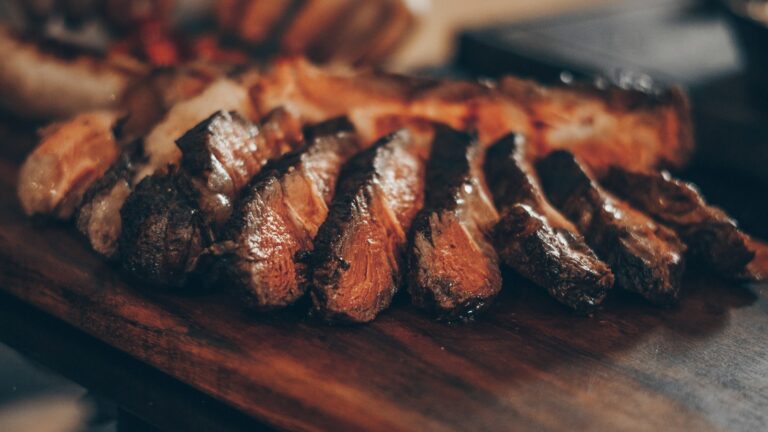
A Michelin-starred steakhouse needs Grade A: 1,100°C+ searing heat, near-zero smoke, 4–5 hour burn, and pristine white ash for presentation. A shisha lounge prioritizes Grade B: consistent low-temperature glow, minimal spark, and neutral aroma over extreme peak heat. An industrial furnace operator buying Grade C cares about calorific value per dollar and bulk logistics. Matching grade to application is how you become a strategic partner, not just a vendor.
The Binchotan Grading System: A Universal Framework
While no ISO standard governs binchotan grades, leading Japanese and Vietnamese producers converge on a three-tier system based on fixed carbon content, ash residue, moisture, density, and visual uniformity. Here’s how to interpret each tier:
Grade A (Premium / Restaurant Grade)
- Fixed carbon: ≥ 93%
- Ash content: ≤ 1.5%
- Moisture: ≤ 4%
- Density: 1.1–1.3 g/cm³
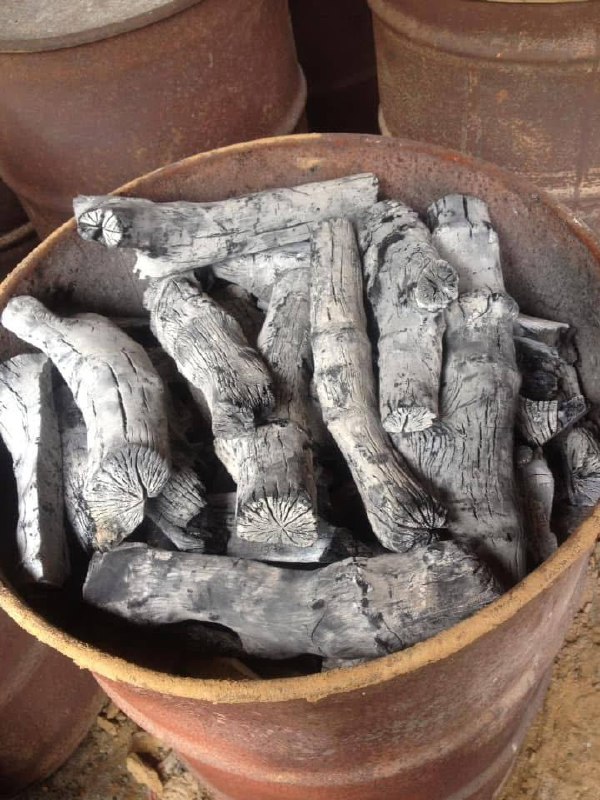
- Appearance: Uniform metallic sheen, dense cross-section, no cracks or bark inclusions
- Burn profile: 4.5–5.5 hours/kg, peak temp 1,100–1,200°C, virtually smoke-free
- Typical use: High-end steakhouses, teppanyaki, omakase counters, premium retail
Grade B (Standard / Commercial Grade)
- Fixed carbon: 88–92%
- Ash content: 1.5–3%
- Moisture: ≤ 5%
- Density: 0.9–1.1 g/cm³
- Appearance: Good luster, minor surface variation, occasional hairline cracks
- Burn profile: 3.5–4.5 hours/kg, peak temp 900–1,050°C, very low smoke
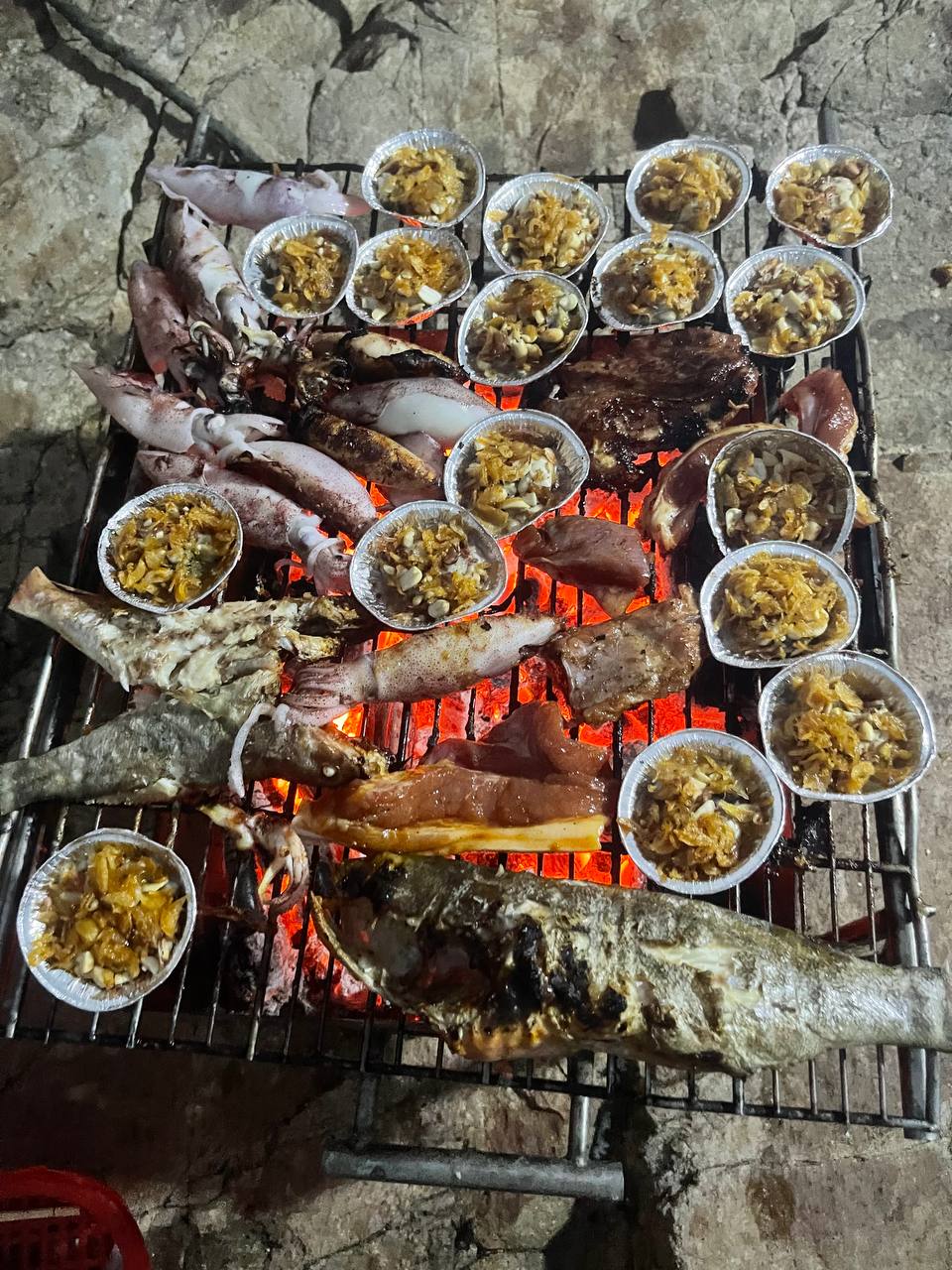
- Typical use: BBQ restaurants, specialty retail, shisha/hookah, catering
Grade C (Industrial / Bulk Grade)
- Fixed carbon: 80–87%
- Ash content: 3–6%
- Moisture: ≤ 6%
- Density: 0.7–0.9 g/cm³
- Appearance: Duller surface, visible pores, some bark/charcoal fines
- Burn profile: 2.5–3.5 hours/kg, peak temp 700–900°C, noticeable smoke
- Typical use: Metal reduction, activated carbon precursor, bulk fuel blending
Off-Grade / Rejects — What to Avoid
Any lot with fixed carbon < 80%, ash > 6%, moisture > 8%, or visible foreign matter (sand, clay, uncarbonized wood) should be classified as reject. Some unscrupulous suppliers blend rejects into Grade C shipments to boost volume. Always request a Certificate of Analysis (CoA) per batch.
Key Technical Parameters That Define Each Grade
| Parameter | Grade A (Premium) | Grade B (Standard) | Grade C (Industrial) | Test Method |
|---|---|---|---|---|
| Fixed Carbon Content | ≥ 93% | 88–92% | 80–87% | ASTM D3172 / ISO 17246 |
| Ash Content | ≤ 1.5% | 1.5–3% | 3–6% | ASTM D3174 / ISO 1171 |
| Moisture (Post-Cooling) | ≤ 4% | ≤ 5% | ≤ 6% | ASTM D3173 / ISO 589 |
| Bulk Density | 1.1–1.3 g/cm³ | 0.9–1.1 g/cm³ | 0.7–0.9 g/cm³ | ISO 23499 |
| Burn Time (Open Grill, 1 kg) | 4.5–5.5 hours | 3.5–4.5 hours | 2.5–3.5 hours | Internal protocol (standardized airflow) |
| Peak Temperature | 1,100–1,200°C | 900–1,050°C | 700–900°C | Type-K thermocouple, 5 cm above embers |
| Smoke Emission | Negligible (clean burn) | Very low | Moderate | Visual + particulate meter (PM2.5) |
| Spark / Pop Tendency | None | Rare | Occasional | Observation during ignition |
| Typical Price Index (FOB Haiphong) | 100 (baseline) | 75–85 | 55–65 | Market reference, Q3 2026 |
Data source: Happy Viet Charcoal internal lab testing (ISO 17025 accredited) and third-party verification. Price index is indicative only—contact sales for current FOB quotations.
How to Match Grade to Your Market Segment
High-End Restaurants & Steakhouses → Grade A
These buyers pay a premium for consistency and performance. They need:
- Instant sear at 1,100°C+ without flare-ups
- Zero smoke for open-kitchen environments
- White ash presentation for tableside service
Your pitch: “Grade A reduces chef labor (fewer charcoal changes), elevates plate presentation, and justifies the restaurant’s premium pricing.”
BBQ Retail & Specialty Stores → Grade A or B
Retail consumers are increasingly educated. Grade A supports a “premium” SKU at $25–35/kg; Grade B serves the “everyday premium” segment at $18–25/kg. Both move well in specialty kitchen stores and online gourmet shops. Key: Retail packaging (2–5 kg boxes) must display grade, burn time, and origin clearly.
Shisha/Hookah Lounges → Grade B (Specific Specs)
Shisha requires sustained low-temperature glow (300–400°C) for 60–90 minutes per session, not peak searing heat. Specify:
- Fixed carbon 90–92% (not higher—excess heat ruins tobacco)
- Ash ≤ 2% (prevents airway clogging)
- Zero spark (safety critical)
- Neutral aroma (no wood notes competing with flavored tobacco)
Grade B from a controlled kiln outperforms Grade A for this application—and costs 15–20% less.
Industrial / Metalworking → Grade C
Foundries and carbon-reduction operations prioritize calorific value per dollar and bulk handling. Grade C delivers 7,000–7,500 kcal/kg at a 35–45% discount to Grade A. Ensure:
- Consistent sizing (20–50 mm) for automated feed systems
- Moisture ≤ 6% (prevents hopper bridging)
- Phytosanitary compliance for wood-derived material
Red Flags When Sourcing: How to Spot Misgraded Binchotan
Visual Inspection Checklist
When a sample arrives (or during factory audit), check:
| ✅ Pass Indicator | ❌ Fail Indicator |
|---|---|
| Uniform metallic luster across all pieces | Dull, chalky, or patchy surfaces |
| Clean, resonant “clink” when two pieces strike | Thud or crumble on impact |
| Cross-section shows dense, glass-like structure | Visible pores, wood grain, or bark rings |
| No fines/dust at bottom of bag | > 5% fines by weight |
| Consistent length/diameter per spec | Wide dimensional variance |
Documentation You Should Demand
Never place a container order without:
- Certificate of Analysis (CoA) — per batch, signed by lab manager, showing fixed carbon, ash, moisture, density, calorific value, heavy metals (Pb, Cd, As, Hg), and sulfur.
- Phytosanitary Certificate — ISPM-15 compliant for wood packaging.
- Food-Grade Declaration — referencing EU 1935/2004 and/or FDA 21 CFR 175.300.
- ISO 9001 / HACCP / ISO 22000 — supplier’s quality management certificates.
- FSC or Equivalent — if sustainability claims are part of your sales proposition.
Pro tip: Ask for the CoA before the proforma invoice. Suppliers who hesitate often have something to hide.
Happy Viet Charcoal’s Grade Assurance Process
In-House Lab Testing (ISO 17025)
Every production batch at our central highlands facility passes through our on-site laboratory, calibrated to ISO/IEC 17025:2017 standards. We test:
- Proximate analysis (fixed carbon, volatile matter, ash, moisture)
- Calorific value (bomb calorimeter, ASTM D5865)
- Heavy metals (ICP-MS, detection limit < 0.1 ppm)
- Sulfur content (ASTM D4239)
- Physical properties (density, dimensions, hardness index)
Results are logged in our ERP with batch-level traceability linking back to raw-material lot, kiln number, carbonization date, and operator.
Batch-Level CoA & Traceability
When you order from Happy Viet Charcoal, you receive:
- Digital CoA (PDF) — issued before container loading, matching the exact pallets in your shipment.
- QR code on each pallet label — scans to batch record, CoA, and production photos.
- Third-party verification option — SGS, Intertek, or Bureau Veritas witness sampling at our cost for first three orders.
This transparency is why importers in 30+ countries rely on us for consistent grade delivery, quarter after quarter.
Conclusion
Choosing the right binchotan grade isn’t about buying the “best” charcoal—it’s about buying the right tool for your customer’s job. Grade A wins steakhouse contracts. Grade B dominates retail shelves and shisha lounges. Grade C fuels industrial furnaces at the lowest cost per BTU. The importer who masters this matching game locks in long-term accounts and protects margins.
Don’t guess. Request the data. Verify the grade. Build your reputation on certainty.
Ready to specify the right grade for your next tender?
👉 Download Our Binchotan Grade Spec Sheet (PDF) — includes full parameter tables, packaging options, MOQ by grade, and FOB pricing tiers.
Or contact our export team for a tailored quotation and complimentary 1 kg test samples of each grade.