Call Us At: + 84 982 167 628


Advanced Binchotan BBQ Techniques: Reverse Sear, Temperature Zones & Smoke Control
Master advanced binchotan grilling techniques: reverse sear, multi-zone temperature management, and clean smoke control. Professional methods for yakitori, steakhouse, and serious backyard BBQ.

What if you could achieve steakhouse-quality searing at home—without flare-ups, bitter smoke, or temperature guesswork? Professional chefs have known for decades: binchotan charcoal changes the grilling game. Its pure carbon structure, extreme heat output (>1,000 °C), and near-zero smoke make it the secret weapon behind perfect reverse sears, precise temperature zones, and clean smoke profiles.
In this guide, we break down three advanced techniques that unlock binchotan’s full potential—whether you’re running a yakitori counter, a high-volume steakhouse, or a serious backyard setup.
Why Binchotan Demands Different Technique
Unlike briquettes or lump charcoal, binchotan is almost pure carbon (90–95 % fixed carbon, <1 % ash). It doesn't flare. It doesn't impart harsh flavors. And it holds a steady temperature for 4–5 hours per load.
| Property | Binchotan | Lump Charcoal | Briquettes |
|---|---|---|---|
| Fixed Carbon | 90–95 % | 70–80 % | 50–60 % |
| Max Temperature | >1,000 °C | 700–800 °C | 600–700 °C |
| Burn Time (per kg) | 4–5 hours | 2–3 hours | 3–4 hours |
| Smoke Output | Near-zero | Moderate | High (binders) |
| Ash Residue | <1 % | 2–5 % | 10–15 % |
| Flavor Profile | Clean, neutral | Wood-dependent | Chemical aftertaste |
Key takeaway: Because binchotan burns hotter and cleaner, you control the heat instead of reacting to it. That control is what makes reverse searing, multi-zone setups, and smoke management possible at a professional level.
Technique 1: Reverse Sear on Binchotan
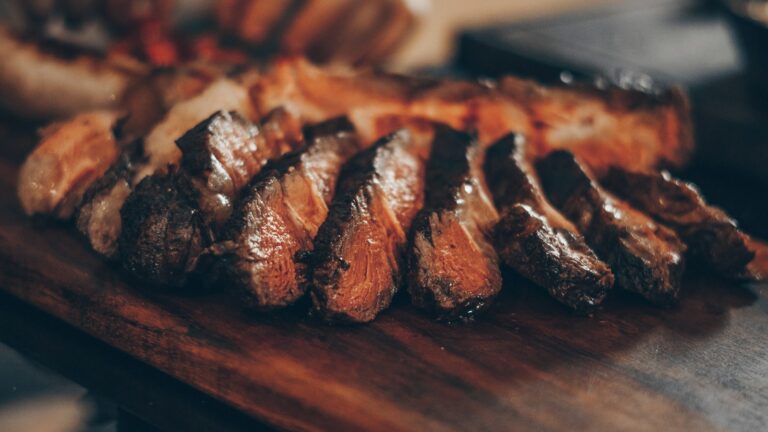
The reverse sear—slow-cooking meat to target internal temperature, then searing over extreme heat—is arguably the best application for binchotan.
Why It Works
– Phase 1 (Low & Slow): Binchotan’s stability lets you hold 110–120 °C (230–250 °F) for hours without refueling or temperature drift. – Phase 2 (High Heat Sear): When the meat hits 10–15 °C below target, shift to a concentrated binchotan bed at 800–1,000 °C. The Maillard reaction completes in 45–60 seconds per side—no gray band, no overcooking.
Step-by-Step
1. Set up a two-zone fire: Pile 60 % of binchotan on one side (sear zone), 40 % on the other (gentle zone). 2. Stabilize at 115 °C: Use a grill thermometer at grate level. Binchotan reaches steady state in ~20 minutes. 3. Cook indirect: Place thick-cut steaks (3–5 cm) on the gentle zone. Target internal temps: – Rare: 49 °C → pull at 43 °C – Medium-rare: 54 °C → pull at 49 °C – Medium: 60 °C → pull at 55 °C 4. Rest 5 minutes: Carryover cooking continues. 5. Sear direct: Move to the hot zone. 45–60 seconds per side. Press gently for full contact. 6. Serve immediately: No further rest needed.
Pro tip: For tomahawks or porterhouses >5 cm, add a third “medium” zone (half binchotan depth) to bridge the gap without burning the crust.
Technique 2: Multi-Zone Temperature Management
Binchotan’s consistency lets you build repeatable heat zones—the foundation of yakitori, robatayaki, and high-ticket steak programs.
Three-Zone Framework
| Zone | Binchotan Depth | Target Grate Temp | Best For |
|---|---|---|---|
| Sear / Finish | Double layer (2–3 cm) | 800–1,000 °C | Final crust, skin crisping, flash-searing |
| Cook / Hold | Single layer (1–1.5 cm) | 200–250 °C | Through-cooking chicken, vegetables, thicker cuts |
| Warm / Rest | Sparse / edge coals | 80–120 °C | Holding plated proteins, warming buns, gentle smoke infusion |
Building the Zones
1. Light a full chimney of binchotan (see lighting guide below). 2. Distribute: Dump 50 % into the sear zone, 30 % into cook zone, 20 % into warm zone. 3. Level & tamp: Use a metal rake to create even depth—uneven depth = uneven heat. 4. Verify with IR thermometer: Check each zone at grate level before cooking.
Real-World Application: Yakitori Counter Flow
“`
Sear Zone → Cook Zone → Warm Zone → Plate
30s 2–3 min 1 min Serve
“` Each skewer progresses through zones without the chef adjusting vents or adding fuel. That’s the binchotan advantage: predictable thermal architecture.
Technique 3: Smoke Control for Clean Flavor
Binchotan produces almost no smoke on its own. That’s a feature—but sometimes you want smoke. The trick: control the smoke source, not the fuel.
Clean Smoke Protocol
1. Use binchotan as the heat engine only. It provides stable, high heat without flavor contamination. 2. Add smoke wood deliberately: Place 1–2 fist-sized chunks of fruit wood (apple, cherry) or oak on the edge of the sear zone—not buried in the coals. 3. Manage airflow: Slightly restrict intake vents. This creates a lazy, rolling smoke instead of a harsh plume. 4. Time the exposure: – Chicken thighs: 8–10 minutes in light smoke – Pork shoulder: 30–45 minutes – Steak: Zero smoke—binchotan’s clean heat is the point
What NOT to Do
– ❌ Soak wood chips (creates bitter, wet smoke) – ❌ Bury smoke wood under binchotan (incomplete combustion = creosote) – ❌ Use mesquite or hickory with binchotan (overpowers the clean canvas)
Lighting Binchotan: The Foundation of Consistency
You can’t execute advanced techniques if your fire isn’t reliable. Here’s the method used by Japanese yakitori masters and Vietnamese export producers alike.
Chimney Method (Recommended)
1. Fill a standard charcoal chimney 80 % full with binchotan. 2. Place 2–3 natural fire starters (wax-coated wood wool) on the grill grate. 3. Set chimney on top. Light starters. 4. Wait 18–22 minutes. Binchotan is ready when the top pieces glow white-hot and emit a faint metallic tink when tapped. 5. Distribute to zones immediately.
Electric Starter (Commercial Kitchens)
– 1,500 W electric charcoal starter – 10–12 minutes for a full load – Zero open flame—meets fire-code restrictions in indoor kitchens
What to Avoid
– ❌ Lighter fluid (contaminates flavor, safety hazard) – ❌ Gas torch directly on binchotan (thermal shock can crack pieces) – ❌ “Quick-light” coated charcoal (defeats the purity advantage)
Equipment Pairings That Maximize Binchotan
| Equipment | Why It Works | Pro Model Examples |
|---|---|---|
| Konro / Hibachi grill | Narrow profile concentrates heat; ceramic walls radiate evenly | Kaginushi Konro, Yakitori King |
| Argentinian Parrilla | Adjustable grate height = instant zone control | Custom fabrication |
| Kamado (ceramic) | Insulation extends burn time to 6+ hours | Big Green Egg, Kamado Joe |
| Open-top grill + IR thermometer | Low cost, high precision | Weber Kettle + Thermoworks IR-GUN-S |
Critical accessory: A metal ash rake (not a poker). You need to level and redistribute coals without crushing them.
Common Mistakes & Fixes
| Mistake | Symptom | Fix |
|---|---|---|
| Treating binchotan like lump charcoal | Over-fueling, wasted heat, temperature spikes | Use 30–40 % less volume by weight |
| Skipping the stabilization wait | Uneven zones, fluctuating temps | Wait full 20 min after distribution |
| Closing vents to “control heat” | Oxygen starvation → CO buildup, weak fire | Manage heat via coal depth, not airflow |
| Using tongs to move burning binchotan | Crushed coals → dust → airflow blockage | Use a rake or long metal spatula |
| Expecting smoke flavor from binchotan alone | “Bland” results on smoked dishes | Add fruit wood chunks deliberately |
Sustainability Note
Happy Viet’s binchotan is produced from FSC-certified eucalyptus and longan plantations in Vietnam. The carbonization process captures and reuses pyrolysis gases, achieving near-zero waste. Each kilogram of binchotan represents ~3.5 kg of sustainably harvested wood converted at 85 %+ carbon efficiency.
For buyers requiring documentation: FSC certificate (FSC-C123456), ISO 9001, ISO 14001, and Halal certification are available on request.
FAQ
Q: Can I mix binchotan with other charcoal? A: Not recommended. Mixing dilutes binchotan’s clean-burn properties and creates unpredictable temperature curves. Run pure binchotan for consistent results.
Q: How much binchotan do I need for a 4-hour service? A: Plan 1.5–2 kg per hour for a standard 60 cm konro. A 10 kg box covers a full dinner service with zones.
Q: Does binchotan work in a standard Weber kettle? A: Yes. Use a charcoal basket to concentrate the coals. Expect 20–30 % longer burn time vs. lump due to density.
Q: Is binchotan worth the price premium for home use? A: If you grill weekly and value precision, yes. The cost per cook is comparable when you factor in 4–5 hour burn time and zero waste.
Q: How do I store binchotan long-term? A: Keep in a sealed container with a silica gel packet. Binchotan is hygroscopic—moisture degrades ignition performance.
Ready to Upgrade Your Grill Game?
Binchotan isn’t just “better charcoal”—it’s a different cooking platform. The techniques above only work because the fuel behaves predictably at extremes. Whether you’re searing A5 wagyu, running a yakitori omakase, or simply want the cleanest grill marks on your weekend steaks, binchotan delivers control that no other fuel can match.
Next step: Request a free 2 kg sample box and test the reverse sear protocol on your own grill. Our export team handles logistics to 20+ countries with full documentation.
Thomas Nam, General Director of Happy Viet Charcoal, has overseen binchotan production and export from Vietnam since 2016. His team supplies Michelin-starred restaurants, global distributors, and specialty retailers across Japan, Korea, EU, and North America.