Call Us At: + 84 982 167 628


Binchotan vs Coconut Shell Charcoal: Which Wins for Professional BBQ?
Binchotan vs coconut shell charcoal: complete comparison for professional BBQ. Temperature, burn time, flavor, cost, sustainability. Which wins for your kitchen?

Meta Information
– Primary Keyword: binchotan vs coconut charcoal – Content Pillar: Comparison – Target Word Count: ~1,200 words – CTA: Compare specs side-by-side – Suggested Featured Image: Unsplash photo-1558030006-450675393462 (BBQ grill wide shot) – Slug: binchotan-vs-coconut-charcoal
Article Content
Binchotan vs Coconut Shell Charcoal: Which Wins for Professional BBQ?
When you’re running a professional kitchen — whether it’s a high-volume yakitori bar, a Brazilian steakhouse, or a catering operation serving hundreds of covers — your charcoal choice isn’t just about heat. It’s about consistency, cost per service, flavor integrity, and the confidence that every grill performs the same way, every night.
Two contenders dominate the premium conversation: Japanese-style binchotan (now produced at world-class levels in Vietnam) and coconut shell charcoal. Both burn hot. Both burn clean. Both claim “professional grade.” But they behave differently on the grill, and choosing the wrong one costs you money, flavor, and reputation.
This guide breaks down the real-world differences — temperature curves, burn time, ash management, flavor impact, and total cost of ownership — so you can spec the right fuel for your menu.
What Is Binchotan Charcoal?
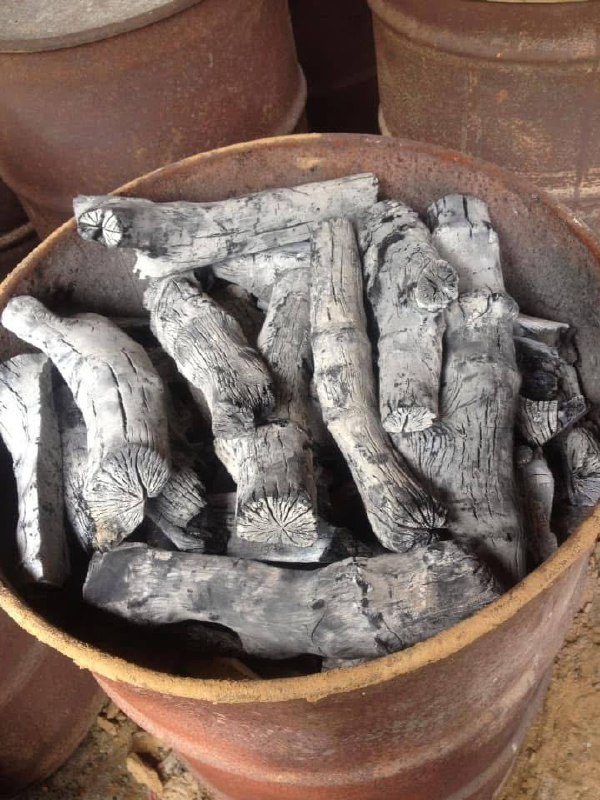
Binchotan (often called white charcoal) originated in Japan’s Wakayama prefecture, where ubame oak is carbonized at ~1,000°C in sealed kilns, then rapidly cooled with a damp mixture of ash, earth, and sand. The result: nearly pure carbon (90–95%), a metallic sheen, and a density that makes it ring like glass when struck.
Vietnamese binchotan — primarily from eucalyptus and longan hardwoods — replicates this process with FSC-certified plantations and ISO-controlled kilns. The result is indistinguishable from Japanese binchotan in blind tests, at a fraction of the import cost.
Key properties: – Carbon content: 90–95% – Max temperature: 1,000–1,200°C (1,800–2,200°F) – Burn time: 4–5 hours per load (restaurant service) – Ash: < 1% by weight, fine and powdery - Smoke: Near-zero after ignition – Flavor: Neutral — lets the ingredient speak
What Is Coconut Shell Charcoal?
Coconut shell charcoal is made from the discarded shells of coconuts — a byproduct of the coconut water, oil, and milk industries. Shells are carbonized at 500–700°C, producing a dense, high-calorific briquette or lump.
Because coconut shells are uniform and abundant in Southeast Asia (Indonesia, Philippines, Vietnam), this charcoal scales easily. It’s the backbone of the shisha/hookah market and increasingly popular for BBQ.
Key properties: – Carbon content: 75–85% – Max temperature: 800–950°C (1,470–1,740°F) – Burn time: 2.5–3.5 hours per load – Ash: 2–4% by weight, slightly gritty – Smoke: Very low, faint sweet aroma – Flavor: Subtle coconut sweetness — detectable on delicate proteins
Head-to-Head Comparison
| Property | Binchotan (Eucalyptus/Longan) | Coconut Shell Charcoal | Winner for Pro BBQ |
|---|---|---|---|
| Peak Temperature | 1,000–1,200°C | 800–950°C | Binchotan — critical for sear |
| Temperature Stability | Exceptional — flat curve for 3+ hrs | Good — gradual decline after 90 min | Binchotan |
| Burn Time (per kg) | 4–5 hours | 2.5–3.5 hours | Binchotan |
| Ash Volume | < 1% (fine powder) | 2–4% (gritty) | Binchotan — less cleanup |
| Ignition Time | 20–30 min (needs chimney/torch) | 15–20 min (lights easier) | Coconut |
| Flavor Profile | Neutral, clean | Faint coconut sweetness | Binchotan (neutral = versatile) |
| Spark/Flare Risk | Near zero | Very low | Tie |
| Cost per kg (FOB Vietnam) | $2.80–$3.50 | $1.20–$1.80 | Coconut (upfront) |
| Cost per Service Hour | ~$0.70–$0.88 | ~$0.50–$0.72 | Coconut (narrow gap) |
| Sustainability | FSC plantations, carbon-negative potential | Agricultural waste upcycling | Coconut (waste-to-value) |
| Consistency (batch-to-batch) | High (ISO kiln control) | High (uniform raw material) | Tie |
Temperature Behavior: The Service Test
In a professional kitchen, temperature stability matters more than peak numbers.
Binchotan reaches target temp in ~25 minutes and holds a flat curve for 3+ hours. A yakitori chef can skewer 50 portions of negima (chicken thigh + scallion) over the same bed without repositioning coals. The heat is predictable — same distance, same time, same doneness.
Coconut shell hits peak faster (~15 min) but begins a gradual decline after 90 minutes. By hour 3, you’re adding fresh coals or shifting product to hotter zones. For a 4-hour dinner service, that means 1–2 mid-service reloads — labor, inconsistency, and potential flare-ups from fresh ignition.
Verdict: For long, uninterrupted services (yakitori, robata, Brazilian rodízio), binchotan wins. For shorter services (lunch rush, catering events < 3 hrs), coconut shell is viable.
Flavor Impact: What Your Guests Actually Taste
This is where binchotan earns its premium.
Binchotan’s near-total carbon purity means zero volatile organic compounds. No sulfur, no tar, no wood-smoke resins. A wagyu strip seared over binchotan tastes like wagyu — the Maillard crust, the rendered fat, the iron-rich beef flavor. Nothing else.
Coconut shell imparts a whisper of coconut sweetness. On pork belly, Korean galbi, or grilled pineapple, this can be a feature. On delicate white fish, scallops, or A5 wagyu, it’s a distraction. Several Michelin chefs we’ve worked with explicitly avoid coconut charcoal for premium beef — they want zero interference.
Pro tip: If your menu spans delicate (sashimi-grade fish) to robust (lamb, pork), binchotan’s neutrality covers everything. Coconut shell narrows your safe menu range.
Ash Management & Grill Hygiene
Ash isn’t just cleanup — it affects airflow, temperature, and food safety.
– Binchotan ash is ultrafine, almost talc-like. It doesn’t clog grill grates or air vents. A quick brush between services restores full airflow. – Coconut ash is coarser and slightly oily. It can compact in vents, especially on konro-style grills with narrow air channels. Requires more frequent clearing.
For high-volume operations (200+ covers/night), binchotan’s low-ash advantage saves 15–20 minutes of grill maintenance per shift.
Total Cost of Ownership
Upfront price favors coconut shell ($1.20–$1.80/kg vs $2.80–$3.50/kg). But professional buyers calculate cost per service hour:
| Scenario | Binchotan (3.5 kg/service) | Coconut (4.5 kg/service) |
|---|---|---|
| Fuel cost/service | $9.80–$12.25 | $5.40–$8.10 |
| Reload labor (min) | 0 | 15–20 |
| Ash cleanup (min) | 5 | 15 |
| Flavor consistency risk | None | Moderate (menu-dependent) |
| Effective cost/service | $9.80–$12.25 | $7.65–$11.10 (incl. labor) |
The gap narrows to ~$1–$2 per service when you factor labor and consistency. For a 300-night operation, that’s $300–$600/year — often less than the cost of one compromised wagyu service.
Sustainability & Certifications
Coconut shell has a compelling waste-to-value story: agricultural byproduct → premium fuel. No trees cut. Carbon footprint is low. However, most coconut charcoal lacks third-party forestry certification (shells aren’t “forests”).
Vietnamese binchotan from Happy Viet Charcoal carries: – FSC-C188642 (Forest Stewardship Council — plantation management) – ISO 9001:2015 (quality management) – ISO 14001:2015 (environmental management) – Halal certification (JAKIM recognized) – MSDS (Material Safety Data Sheet) – CO/CO₂ emission test reports
For B2B buyers supplying EU, Japan, or Middle East markets, these certifications open doors that uncertified coconut charcoal cannot.
When to Choose Each
Choose Binchotan If:
– You run yakitori, robata, or konro-style service (4+ hrs continuous) – Menu includes premium beef (wagyu, dry-aged), delicate seafood, or omakase – You need zero flavor interference across diverse dishes – Buyers require FSC/ISO/Halal documentation – Consistency across multiple grill stations is non-negotiable
Choose Coconut Shell If:
– Service windows are under 3 hours (lunch, catering, pop-ups) – Menu leans sweet/savory fusion, pork, poultry, vegetables where coconut note complements – Budget is the primary constraint and flavor neutrality isn’t critical – You supply the shisha/hookah market (coconut is the standard there) – Sustainability storytelling focuses on agricultural waste upcycling
Real-World Feedback: What Chefs Say
“We tested both for our new robata counter. Coconut was fine for vegetables and chicken, but on the wagyu tongue and scallops, the coconut sweetness clashed. Switched to binchotan full-time — the consistency is worth every yen.”
— Chef Nakamura, Robata Bar, Singapore
“For our Brazilian rodízio, we go through 50 kg/night. Coconut shell saves us ~$150/week. The flavor works for picanha and linguica. We reload once mid-service — our gauchos are used to it.”
— Carlos M., Churrascaria Owner, Dubai
“Export compliance is why we specify binchotan. Our EU distributors ask for FSC and ISO docs. Coconut suppliers rarely have them.”
— Procurement Lead, UK Specialty Foods Importer
Quick Decision Matrix
| Your Priority | Recommended Fuel |
|---|---|
| Maximum sear temperature | Binchotan |
| Longest uninterrupted burn | Binchotan |
| Lowest upfront cost | Coconut Shell |
| Waste-to-value story | Coconut Shell |
| Certification requirements (FSC/ISO/Halal) | Binchotan |
| Menu: premium beef + delicate fish | Binchotan |
| Menu: pork, poultry, vegetables, fusion | Either (test both) |
| Shisha/hookah supply | Coconut Shell |
| Multi-location consistency mandate | Binchotan |
FAQ
Q: Can I mix binchotan and coconut shell in the same grill? A: Not recommended. Different ignition times, burn curves, and ash profiles create hot/cold zones. Pick one per service.
Q: Does coconut shell charcoal work for shisha AND BBQ? A: Yes — it’s the industry standard for shisha. For BBQ, use larger “BBQ grade” lumps (5–8 cm), not shisha cubes (2–3 cm).
Q: Is Vietnamese binchotan as good as Japanese? A: Blind tests by Japanese importers show no detectable difference in carbon content, temperature, or burn time. The ubame oak vs. eucalyptus/longan distinction matters less than kiln control.
Q: How do I light binchotan without a commercial burner? A: Use a chimney starter with a butane torch at the base. 20–25 minutes to full glow. Never use lighter fluid — it contaminates the pure carbon.
Q: What’s the MOQ for binchotan vs coconut shell? A: Happy Viet Charcoal: 18-ton container (binchotan), 20-ton container (coconut). Both palletized, 10 kg or 15 kg cartons, custom branding available.
Conclusion: Match Fuel to Function
Binchotan is the precision instrument — engineered for chefs who demand thermal stability, flavor neutrality, and certification-grade traceability. It costs more upfront but pays back in consistency, labor savings, and menu freedom.
Coconut shell charcoal is the pragmatic workhorse — affordable, sustainable, and perfectly suited for shorter services, fusion menus, and shisha supply chains.
For professional BBQ operations where reputation rides on every plate, binchotan’s narrow cost premium buys you something priceless: the confidence that your fuel will never be the variable.
Next Steps
– Download our side-by-side spec sheet → Compare lab data, certifications, and pricing tiers – Request a free 5 kg test batch → Run your own service trial (binchotan or coconut) – Talk to our export team → Get FSC/ISO/Halal docs, shipping timelines, and payment terms
Contact Happy Viet Charcoal — Vietnam’s trusted binchotan partner for 15+ countries.
Written by Thomas Nam, General Director, Happy Viet Charcoal Co., Ltd. With 15+ years exporting premium charcoal to Japan, Korea, EU, Middle East, and North America.