Call Us At: + 84 982 167 628


Binchotan Charcoal for Restaurants: Best Commercial Fuel

What Is Binchotan Charcoal?
Binchotan (also known as white charcoal) is a premium-grade charcoal originally developed in Japan’s Wakayama Prefecture during the 17th century. It’s produced through a painstaking carbonization process that takes hardwood — typically eucalyptus, longan, or oak — and heats it to temperatures exceeding 1,000°C in a specialized kiln.
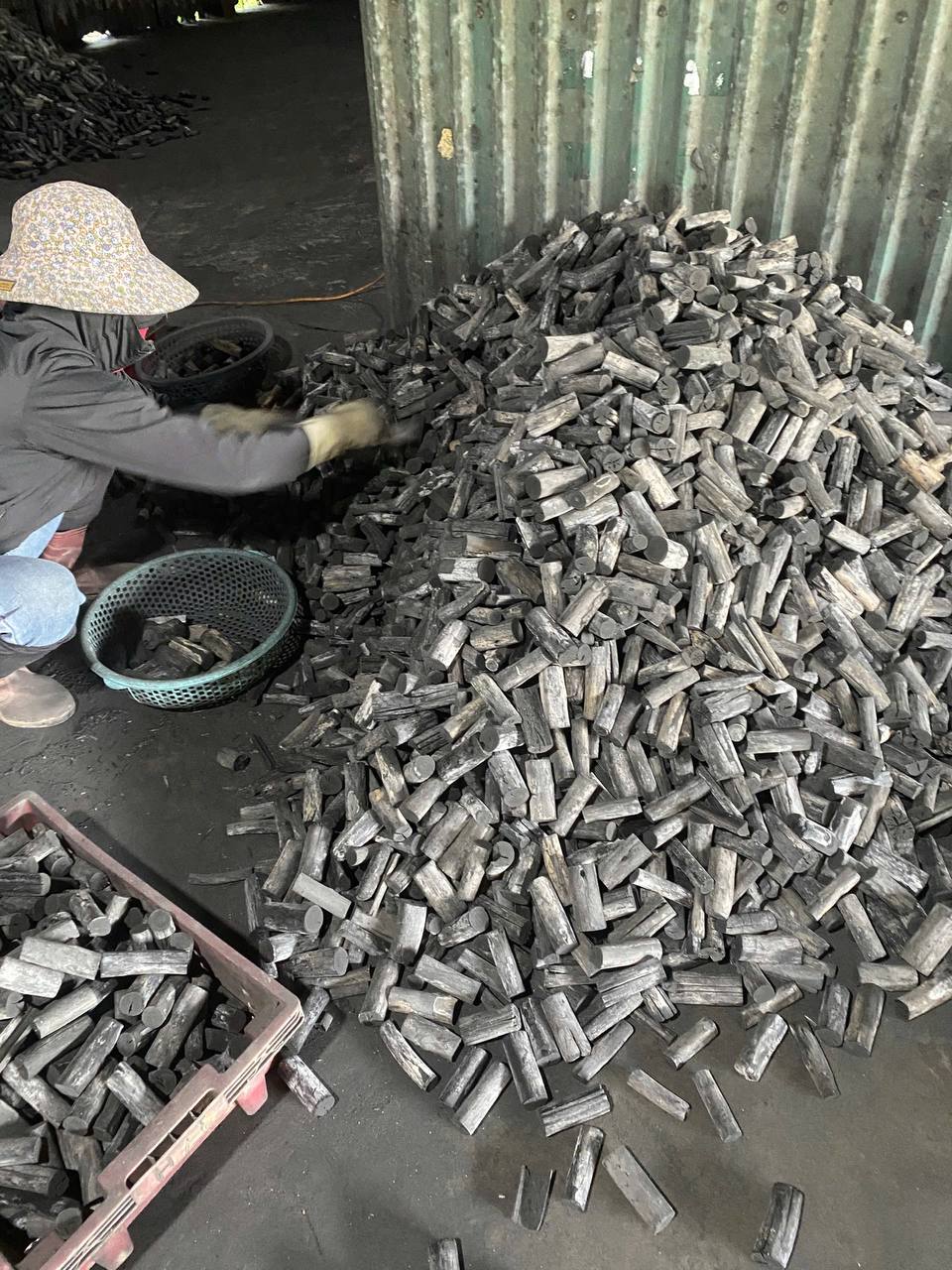
The result is a charcoal with a carbon content of over 90%, far surpassing conventional black charcoal (typically 60–75% carbon). This high purity is what gives binchotan its signature properties: extreme heat, long burn time, and virtually no smoke or sparks.
At Happy Viet Charcoal, we produce binchotan in Vietnam using sustainably harvested eucalyptus and longan wood, following the traditional Japanese method but with modern quality control. Every batch is tested for calorific value, ash content, and moisture before export.
—
Why Restaurants Choose Binchotan Charcoal
1. High Calorific Value (7,000+ kcal/kg)
The single most important metric for any cooking fuel is its calorific value — the amount of heat energy it produces per kilogram. Binchotan charcoal averages 7,000–7,500 kcal/kg, which is significantly higher than:
| Fuel Type | Calorific Value (kcal/kg) |
|---|---|
| Binchotan white charcoal | 7,000–7,500 |
| Premium lump charcoal | 6,500–7,000 |
| Standard black charcoal | 5,500–6,500 |
| Charcoal briquettes | 5,000–6,000 |
| Coconut shell charcoal | 6,000–6,800 |
For restaurants, this means:
- Faster cooking times — higher heat sears meat quickly, locking in juices and flavor.
- Less fuel consumed — binchotan burns hotter per kg, so you use less charcoal per service.
- Consistent temperature — the dense carbon structure maintains steady heat for hours.
2. Spark-Free Burning
Safety is non-negotiable in a commercial kitchen. Conventional charcoal often produces sparks when lit or when fat drips onto it during grilling. These sparks can:
- Burn staff and customers at open grill stations
- Damage ventilation systems and grease filters
- Create fire hazards in indoor or semi-enclosed kitchens
Binchotan charcoal is naturally spark-free. Its dense, metallic-like structure means it burns with a clean, steady glow rather than popping or crackling. This makes it ideal for:
- Teppanyaki and robatayaki stations where chefs cook in front of guests
- Indoor BBQ restaurants with limited ventilation
- Hotel kitchens with strict fire safety regulations
3. Smokeless and Odorless
Nothing ruins a dining experience faster than acrid smoke billowing across the restaurant. Binchotan produces virtually no smoke when properly lit, and it burns completely odorless.
This matters because:
- Smoke can overwhelm the natural aroma of premium ingredients
- It irritates diners sitting near grill stations
- It leaves residue on kitchen walls, ceilings, and equipment
With binchotan, your chefs can grill wagyu beef, fresh seafood, or delicate vegetables without any unwanted smoke flavor — the charcoal lets the ingredient’s true taste shine through.
4. Exceptionally Long Burn Time
A single piece of binchotan charcoal can burn for 4–5 hours at grilling temperature — roughly 2–3 times longer than conventional lump charcoal. For a restaurant, this translates directly to:
- Fewer fuel changes during service — staff can focus on cooking, not tending the fire
- Lower total fuel cost per service, despite the higher per-kg price
- Consistent heat from the first order to the last
5. Low Ash Residue (Under 1%)
Binchotan leaves behind less than 1% ash by weight, compared to 3–5% for standard charcoal. This means:
- Less frequent ash removal during service
- Cleaner grill surfaces and better food hygiene
- Reduced waste disposal costs
—
Binchotan vs. Other Restaurant Charcoal: Quick Comparison
| Property | Binchotan | Lump Charcoal | Briquettes | Coconut Shell |
|---|---|---|---|---|
| Calorific value | 7,000–7,500 | 6,500–7,000 | 5,000–6,000 | 6,000–6,800 |
| Burn time | 4–5 hours | 1.5–2.5 hours | 2–3 hours | 2–3 hours |
| Smoke | None | Low–moderate | Low | Low |
| Sparks | None | Some | Few | Few |
| Ash content | <1% | 3–5% | 5–8% | 3–5% |
| Odor | None | Wood aroma | Chemical smell possible | Neutral |
| Best for | Premium grilling, restaurants | Casual BBQ | Low-cost bulk | Shisha, home use |
—
How Restaurants Use Binchotan Charcoal
Japanese Cuisine (Robatayaki, Yakitori, Teppanyaki)
Binchotan is the gold standard for Japanese grilling. The consistent, high heat allows chefs to achieve the perfect char on yakitori skewers while keeping the interior juicy. The lack of smoke preserves the delicate flavors of seafood and vegetables.
Turkish and Middle Eastern Grilling
For restaurants serving kebabs, shish, and mixed grills, binchotan offers the high temperature needed for proper searing without flare-ups. The spark-free property is especially valuable for open-front grills common in Turkish ocakbaşı restaurants.
Fine Dining and Steak Houses
High-end steakhouses use binchotan to achieve the Maillard reaction — the browning that creates complex flavor compounds on the meat’s surface. At 700+°C surface temperature, binchotan sears faster and more evenly than any gas or electric grill.
Shisha Lounges and Cafés
Premium shisha lounges are switching to binchotan because it burns longer, doesn’t alter the tobacco’s flavor, and produces no sparks — a critical safety feature in indoor settings.
—
How to Source Binchotan Charcoal for Your Restaurant
What to Look for in a Supplier
- Calorific value certification — ask for lab test results confirming 7,000+ kcal/kg
- Spark-free guarantee — request a sample to test before placing a bulk order
- Sustainable sourcing — look for FSC certification to ensure responsible forestry
- Export experience — choose a supplier with proven logistics to your country
- Consistent quality — ask about batch testing and quality control processes
Packaging Options
At Happy Viet Charcoal, we offer:
- 5 kg and 10 kg bags for small restaurants and testing
- 15–20 kg cartons for medium-volume kitchens
- Pallet quantities (500–1,000 kg) for large restaurants and distributors
- Private label packaging with your restaurant’s branding
Minimum Order Quantity (MOQ)
- Sample order: 10–20 kg (for quality testing)
- Trial order: 100–500 kg
- Regular supply: 1–5 tons per shipment
- Long-term contract: flexible monthly/quarterly delivery
Shipping and Delivery
We ship from Hai Phong port, Vietnam to destinations worldwide. Common delivery terms:
- FOB Hai Phong — you arrange shipping
- CIF your port — we handle shipping to your destination
- Door-to-door — available for select destinations
Typical transit time to Turkey, Europe, or the Middle East: 20–35 days by sea freight.
—
Cost Analysis: Is Binchotan Worth It for Restaurants?
While binchotan charcoal costs more per kilogram than conventional charcoal, the total cost per service is often lower:
| Factor | Binchotan | Standard Lump Charcoal |
|---|---|---|
| Price per kg | Higher | Lower |
| Burn time per kg | 4–5 hours | 1.5–2.5 hours |
| Kg needed per 8-hour service | ~2 kg | ~4–5 kg |
| Effective cost per service | Comparable or lower | Baseline |
| Labor saved (fewer refuels) | ✅ | ❌ |
| Cleaner kitchen (less ash) | ✅ | ❌ |
For a restaurant serving 50–100 covers per day, the fuel savings and labor efficiency typically offset the higher per-kg price within the first month.
—
Quality Certifications to Look For
When sourcing binchotan for restaurant use, always verify:
- FSC (Forest Stewardship Council) — confirms sustainable wood sourcing
- MSDS (Material Safety Data Sheet) — confirms the charcoal is safe for food contact
- Halal certification — important for restaurants serving Muslim customers
- Phytosanitary certificate — required for import into most countries
- Lab test report — should confirm calorific value, fixed carbon, ash content, and moisture
Happy Viet Charcoal provides all of the above with every shipment. View our certifications here.
—
Conclusion
For restaurants that take their grilling seriously, binchotan charcoal is not a luxury — it’s a competitive advantage. With its 7,000+ kcal/kg calorific value, spark-free burning, smokeless operation, and 4–5 hour burn time, it outperforms every other fuel type on the metrics that matter most in a commercial kitchen.
Whether you’re running a Japanese robatayaki counter, a Turkish ocakbaşı grill, or a fine-dining steakhouse, switching to binchotan will improve your food quality, reduce your fuel costs per service, and create a safer, cleaner kitchen environment.
Ready to test binchotan in your restaurant? Contact us for a free sample, or download our binchotan spec sheet for detailed technical specifications.
—
FAQ
Is binchotan charcoal safe for indoor restaurant use?
Yes. Binchotan burns smokeless and spark-free, making it one of the safest charcoals for indoor and semi-enclosed restaurant kitchens. However, proper ventilation is still required per local fire and health codes.
How much binchotan charcoal does a restaurant use per day?
A typical restaurant with 50–100 daily covers uses approximately 2–3 kg of binchotan per service day, thanks to its long burn time (4–5 hours per piece).
Can I mix binchotan with regular charcoal?
Yes, many restaurants use a base layer of conventional charcoal and top it with binchotan to extend burn time and improve heat consistency. However, for best results, use binchotan exclusively.
How do I light binchotan charcoal?
Binchotan requires higher ignition temperatures than regular charcoal. Use a binchotan starter pot (charcoal chimney) placed over a gas flame for 15–20 minutes, or use a heat gun. Never use lighter fluid — it will contaminate the charcoal and affect food taste.
What’s the shelf life of binchotan charcoal?
When stored in a dry place, binchotan has an indefinite shelf life. It does not degrade, absorb moisture, or lose its properties over time, making it ideal for bulk purchasing.
—
*Author: Thomas Nam, Director of Happy Viet Charcoal Ltd. With 8+ years of experience in charcoal manufacturing and export, Thomas supplies premium binchotan to restaurants and distributors in over 20 countries.*
New to sourcing from Vietnam? Read our complete guide to buying charcoal from Vietnam.

