Call Us At: + 84 982 167 628


What Is Binchotan Charcoal? Premium Choice for BBQ

What Is Binchotan Charcoal?
Binchotan charcoal, also known as white charcoal, is a traditional Japanese activated carbon renowned for its high purity, long burn time, and minimal smoke. Originating from the Kishu region of Japan, the technique has been adapted in Vietnam using locally sourced hardwoods such as eucalyptus, longan, and chestnut. Through a slow‑firing process in specialized kilns at temperatures exceeding 1,000 °C, the wood is carbonized and then activated, resulting in a dense, almost metallic black‑white product that delivers exceptional heat output.
Learn more about our company on the About Us page.
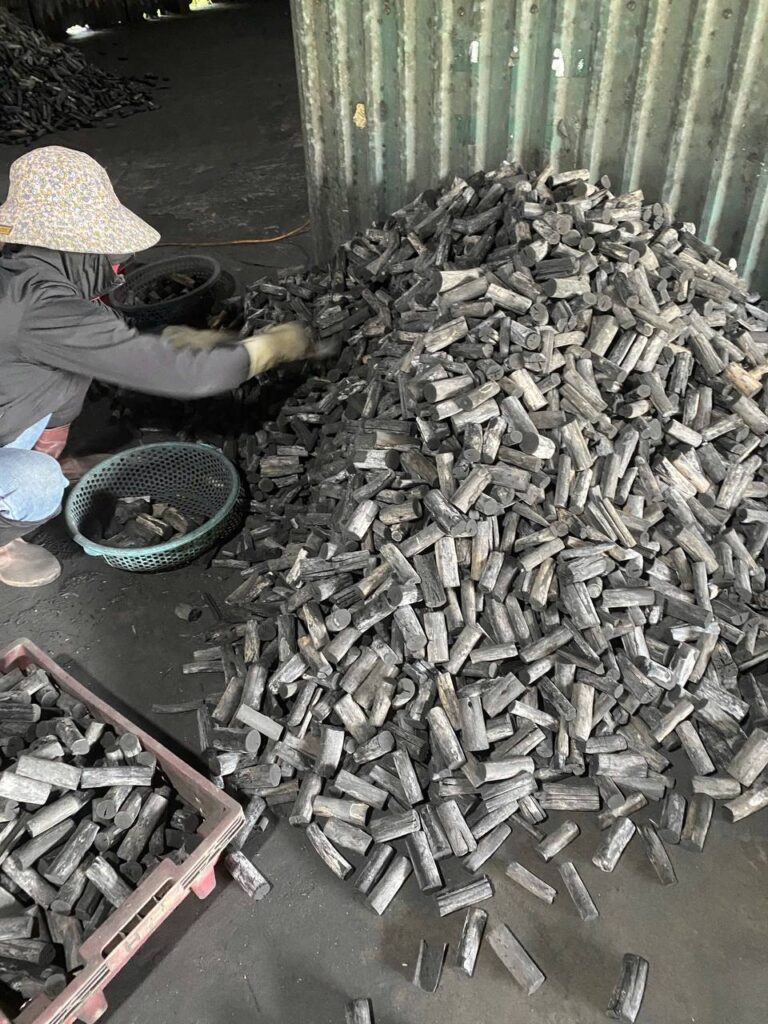
Origin and Production Process
In Vietnam, the raw material is carefully selected from sustainably managed forests. The logs are cut into uniform pieces, stacked in brick‑lined kilns, and fired for several days. During the carbonization stage, volatile compounds are driven off, leaving a high‑fixed‑carbon residue. The final activation step involves exposing the hot charcoal to a controlled oxygen flow, which opens up micropores and enhances its adsorptive properties.
This method not only yields a superior fuel but also ensures low ash content (< 8 %) and a high fixed‑carbon ratio (> 75 %), both critical for consistent grilling performance.
Chemical and Physical Properties
- Fixed Carbon: 75‑85 % (provides long-lasting heat)
- Ash Content: 5‑8 % (minimal cleanup)
- Volatile Matter: < 10 % (low smoke)
- Calorific Value: 30‑33 MJ/kg (high energy density)
- Density: 1.0‑1.3 g/cm³ (hard, resistant to breaking)
- pH: Neutral to slightly alkaline (does not impart acidic flavors)
Key Benefits for BBQ
- Burns hotter and longer (up to 5 hours) with minimal ash.
- Produces clean, odor‑free heat that enhances the natural flavor of meat, fish, and vegetables.
- Provides stable temperature control, ideal for searing steaks, slow‑cooking ribs, or smoking delicate seafood.
- Eco‑friendly: made from renewable wood sources and a carbon‑neutral production process.
- Low spark and flare‑up risk, increasing safety on the grill.

How Binchotan Compares to Other Charcoals
| Characteristic | Binchotan (Vietnam) | Traditional Lump Charcoal | Briquettes |
|---|---|---|---|
| Fixed Carbon (%) | 75‑85 | 50‑70 | 40‑60 |
| Ash (%) | 5‑8 | 8‑12 | 6‑10 |
| Burn Time (hrs) | 4‑6 | 2‑3 | 3‑4 |
| Smoke/Odor | Very low | Moderate | Low‑moderate (depends on additives) |
| Temperature (°C) | > 1000 | 700‑900 | 600‑800 |
The table illustrates why many professional chefs and BBQ enthusiasts prefer binchotan for precision cooking.
How to Use Binchotan Charcoal
- Lighting: Use a charcoal chimney or a propane torch. Place the binchotan pieces in the chamber and ignite from the bottom. Because of its density, it may take 10‑15 minutes to reach a glowing red‑white state.
- Distribute: Once fully lit, spread the charcoal evenly across the grill grate. For direct grilling, create a single layer; for indirect cooking, pile charcoal on one side.
- Temperature Control: Adjust the airflow vents on your grill. More oxygen = higher temperature; less oxygen = lower, steady heat. Because binchotan burns consistently, small adjustments yield precise temperature changes.
- Cooking: Place food on the grill once the surface temperature stabilizes (around 800‑900 °C for searing, 200‑250 °C for low‑and‑slow). Use a grill thermometer for accuracy.
- Extinguishing: After cooking, close the grill lid and vents to smother the fire. The remaining charcoal can be reused for another session if it hasn’t turned to ash.
Health and Safety Considerations
Binchotan produces minimal smoke and polycyclic aromatic hydrocarbons (PAHs) compared with many lump charcoals, making it a healthier option for indoor‑ventilated or semi‑outdoor cooking environments. Always ensure adequate ventilation, and never use gasoline or other accelerants to light the charcoal.
Sustainability and Certifications
Happy Viet Charcoal sources its raw material from FSC‑certified forests, guaranteeing responsible forest management. The production process adheres to ISO 14001 environmental standards, and each batch is tested for heavy‑metal compliance under MSDS guidelines. Additionally, our products are Halal‑certified, making them suitable for a wide range of culinary applications.
Learn more about our commitment to sustainability on our Sustainability page.
Frequently Asked Questions (FAQ)
Is binchotan charcoal safe for food?
Yes. Binchotan is a natural, chemical‑free charcoal that meets food‑grade safety standards. Its low volatile content ensures minimal transfer of unwanted compounds to food.
How does binchotan differ from regular lump charcoal?
Binchotan has a higher fixed‑carbon content, lower ash, and burns hotter and longer. It also produces far less smoke, offering a cleaner flavor profile.
Can I reuse binchotan after a cook‑out?
If the charcoal has not fully turned to ash, you can extinguish it by closing the vents and reuse it for another session. Simply break apart any large pieces and relight as needed.
Conclusion
Binchotan charcoal stands out as a premium fuel choice for anyone serious about grilling, smoking, or high‑temperature cooking. Its superior heat output, long burn time, clean flavor, and eco‑friendly production make it a worthwhile investment for both home enthusiasts and professional chefs. By choosing Viet‑produced binchotan from Happy Viet Charcoal, you support sustainable forestry and receive a product backed by rigorous quality controls.
Ready to experience the difference? Explore our binchotan range or contact us for a free sample and personalized consultation.
Not sure which fuel to choose? See our guide to the best charcoal for BBQ.